
GUIDE • UPDATED MAR 2026
Why Your Website Gets Traffic But No Enquiries
Traffic is just the beginning. Learn how to convert visitors into leads and maximise your website’s potential.
RankFactory handles SEO content for businesses of all sizes. See how it works →
Understanding the Conversion Gap
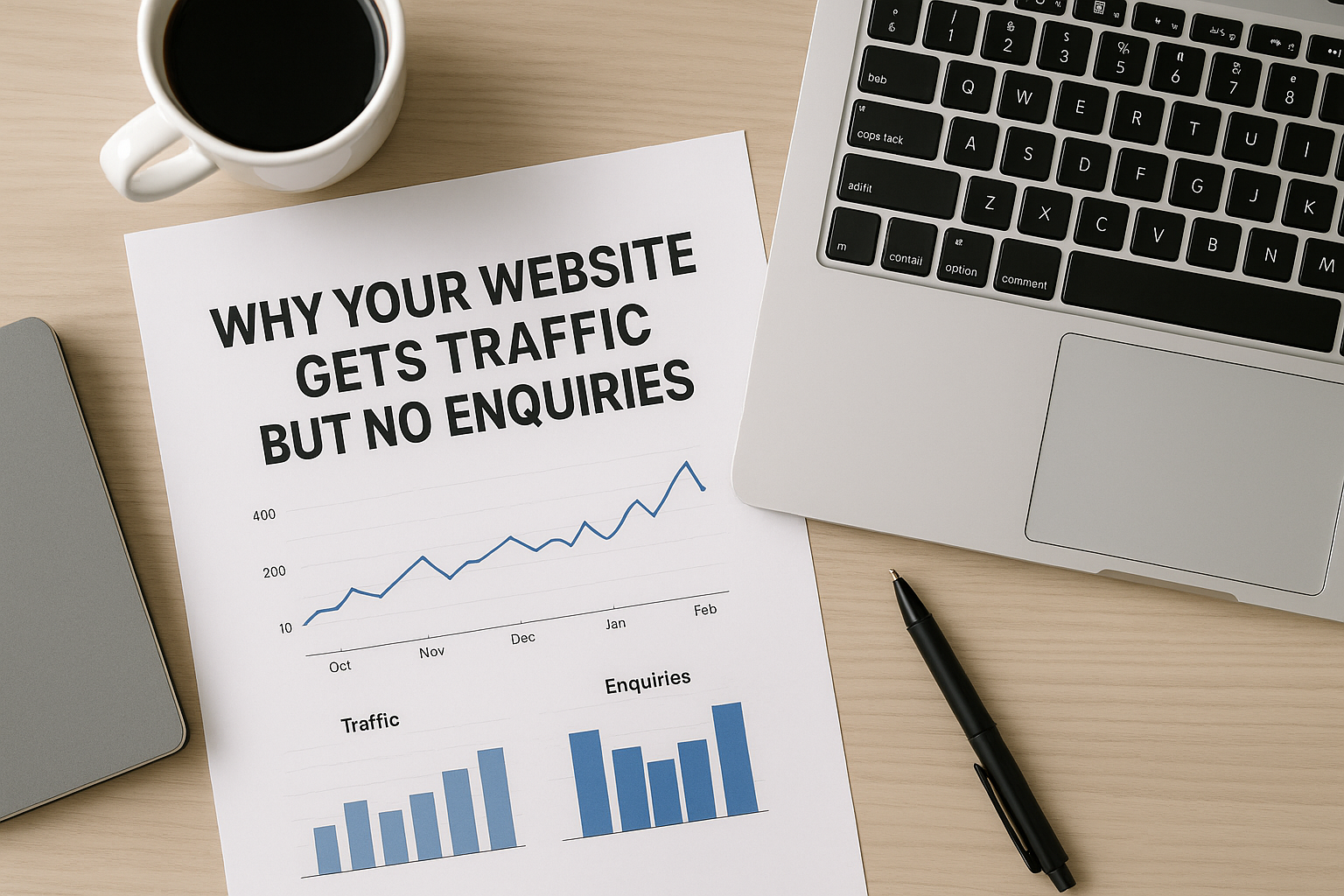
Many businesses face a frustrating situation: their website attracts a significant amount of traffic, yet leads and enquiries remain disappointingly low. This discrepancy is often termed the "conversion gap." To bridge this gap, it’s essential to understand the factors that contribute to converting visitors into leads.
Conversion rate is calculated by dividing the number of conversions (leads, enquiries, sales) by the total number of visitors and multiplying by 100. For example, if your site receives 1,000 visitors in a month and generates 50 leads, your conversion rate is 5%. A healthy conversion rate varies by industry, but aiming for 2-5% is a good starting point.
Common Reasons for Low Conversion
Understanding why visitors aren't converting is the first step to improvement. Here are some common pitfalls:
- Poor User Experience (UX): A complicated navigation structure or slow loading times can frustrate potential leads. Aim for a loading time of under three seconds and ensure your site is mobile-friendly.
- Unclear Value Proposition: If visitors can't quickly grasp what you offer or how it benefits them, they will leave. Ensure your value proposition is prominently displayed on your homepage.
- Weak Calls to Action (CTAs): Vague or poorly placed CTAs can hinder conversions. Use clear, action-oriented language and place CTAs strategically throughout your site.
- Inadequate Content: If your content doesn’t address the needs and questions of your audience, they won't engage. Consider using an SEO Content Service to create targeted, relevant content.
- Lack of Trust Signals: Visitors need to feel confident before making an enquiry. Incorporate testimonials, case studies, and security badges to build trust.
Optimising Your Website
Once you've identified the issues, it’s time to implement changes. Here are actionable steps to optimise your website for conversions:
- Improve Site Speed: Use tools like Google PageSpeed Insights to identify and fix speed issues. Consider optimising images, leveraging browser caching, and minimising HTTP requests.
- Enhance User Experience: Simplify navigation and ensure your site is intuitive. Conduct user testing to identify pain points and areas for improvement.
- Refine Your Value Proposition: Clearly articulate what sets your business apart. Use concise language and focus on benefits rather than features.
- Strengthen Your CTAs: Use action-oriented phrases like "Get Your Free Quote" or "Schedule a Consultation" and ensure they stand out visually on the page.
- Create Engaging Content: Regularly update your website with valuable content that addresses your audience's pain points. This could include blog posts, guides, and FAQs.
- Implement Trust Signals: Add customer testimonials, industry certifications, and case studies to your site. Consider using video testimonials for added impact.
Tracking and Analytics
To effectively close the conversion gap, you need to track your website's performance. Here’s how to use analytics to inform your strategy:
Start by setting up Google Analytics to monitor traffic sources, user behaviour, and conversion rates. Pay attention to metrics such as:
- Bounce Rate: A high bounce rate may indicate that visitors are not finding what they expect. Aim for a bounce rate below 40%.
- Average Session Duration: Longer sessions often correlate with higher engagement. If users are leaving quickly, consider evaluating your content.
- Conversion Rate: Regularly assess your conversion rate and set specific goals for improvement.
Use A/B testing to experiment with different elements on your site, such as headlines, images, and CTA placements. This data-driven approach allows you to refine your strategy based on what resonates with your audience.
Frequently asked questions
What is a good conversion rate for my website?
A good conversion rate varies by industry, but generally, a rate between 2-5% is considered average. However, aiming for higher rates through continuous optimisation is advisable.
How can I improve my website's loading speed?
To improve loading speed, optimise images, reduce server response times, and use a content delivery network (CDN). Tools like Google PageSpeed Insights can help identify specific issues.
What should I include in my website's content?
Your content should address the needs of your target audience, provide clear information about your services, and include strong CTAs. Regularly updating your content is also crucial for engagement.
How can I track my website's performance?
Utilise tools like Google Analytics to monitor traffic, user behaviour, and conversion rates. Set up goals and track key performance indicators (KPIs) to measure success.
What are trust signals and why are they important?
Trust signals, such as customer testimonials, security badges, and industry certifications, help build credibility with your audience. They are essential for encouraging visitors to take action.
Ready to put this into practice?
RankFactory handles topic research, writing, internal linking and publishing every month — so your site grows consistently without you managing it.
Work with RankFactory